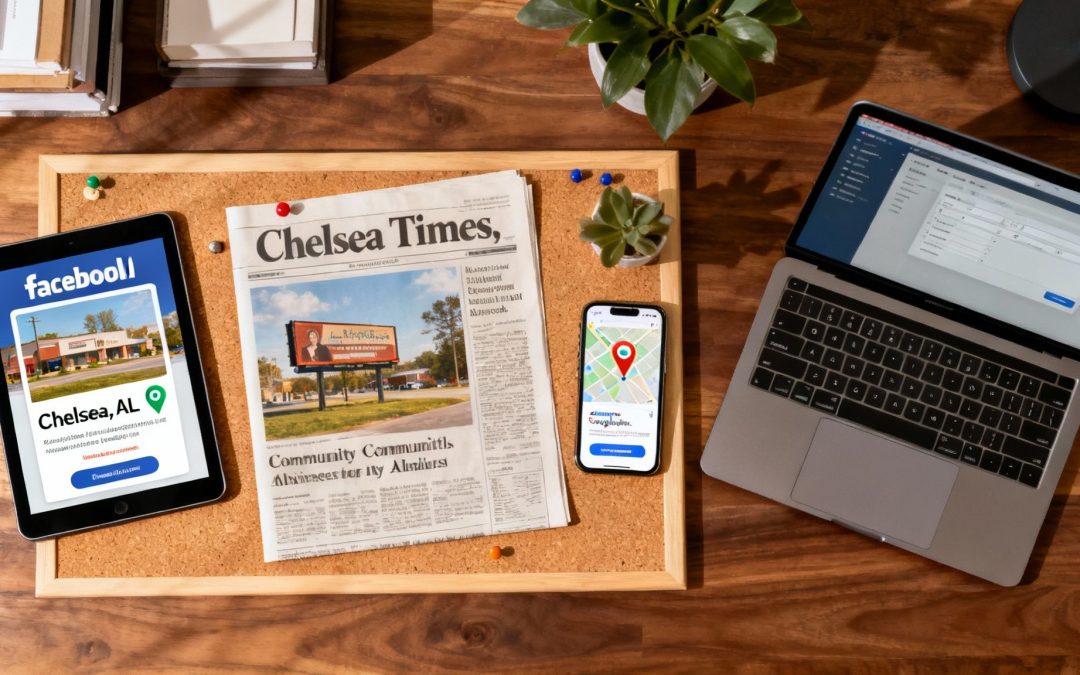
Here’s the simple truth: Local marketing is all about focusing your promotional efforts on a specific geographic area right around your business. It’s about targeting the potential customers who live, work, and shop in your immediate neighborhood.
Understanding Local Marketing Fundamentals
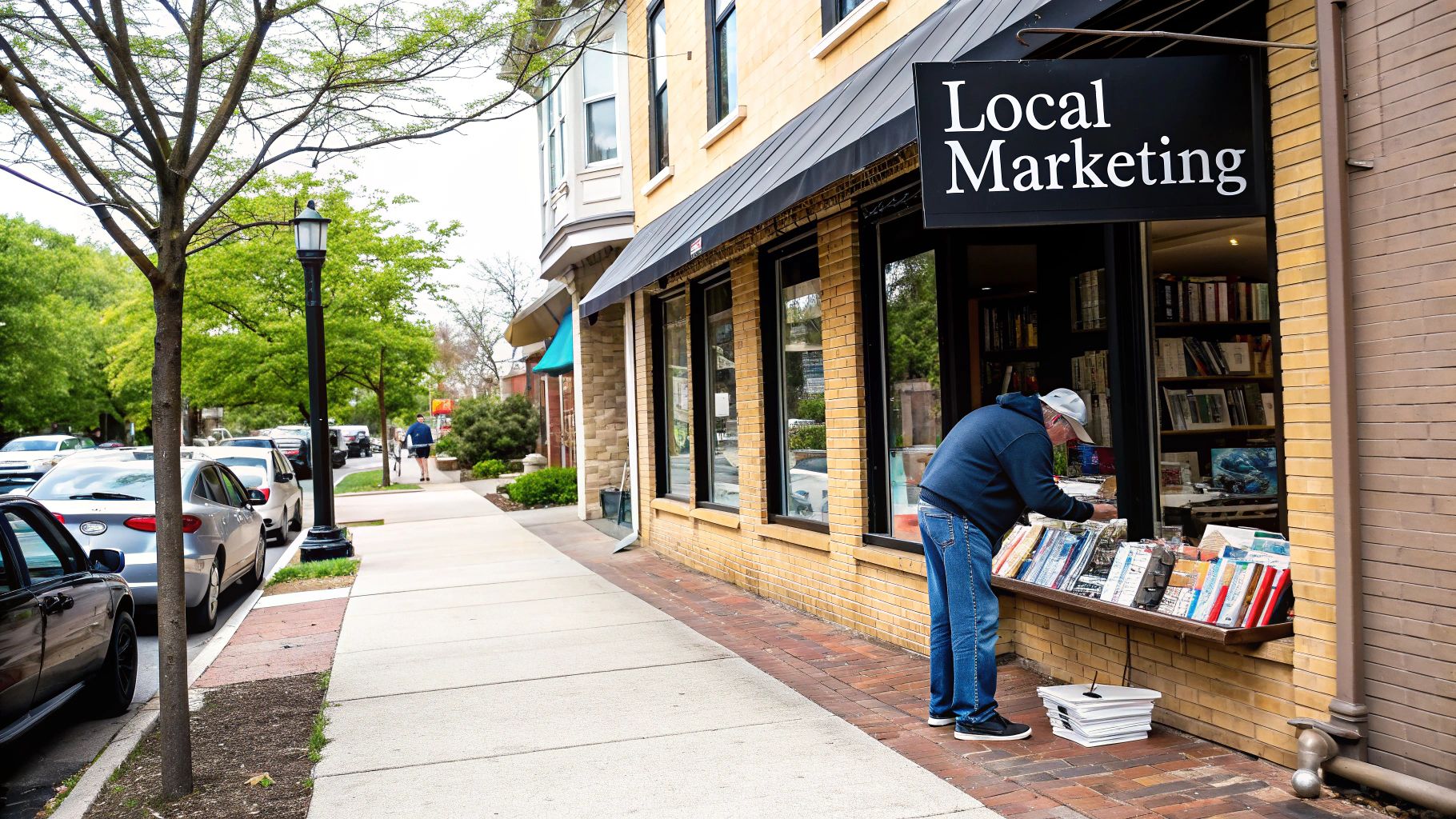
Let’s say you own a cozy bookstore here in Chelsea, AL. You don’t need expensive national ad campaigns to reach readers across the country; you need to connect with the book lovers driving past your door every single day. That’s the entire idea behind local marketing.
It’s not just about getting a pin on a map. It’s about becoming a visible, trusted part of your community’s daily life. Think of it as being the most helpful neighbor on the block. While a huge corporation might spend millions on a Super Bowl ad, a local business thrives by building real, authentic relationships with the people it serves face-to-face.
This approach turns your physical proximity into genuine customer loyalty.
What’s the Real Focus of Local Marketing?
The goal is simple: increase brand awareness and drive foot traffic from a highly relevant, nearby audience. This is absolutely critical for any brick-and-mortar business that depends on people walking through the door.
And people are definitely looking. In fact, a staggering 46% of all Google searches are from users trying to find local information. Your neighbors are actively searching for businesses just like yours, right now.
To get started, here’s a quick look at the core components that make up a strong local strategy.
Local Marketing at a Glance
| Component | Description | Primary Goal |
|---|---|---|
| Local SEO | Making your website visible for “near me” and location-based searches. | Attract online searchers who are ready to buy or visit. |
| Community Engagement | Sponsoring a local team, hosting an event, or partnering with other shops. | Build genuine relationships and become a community staple. |
| Online Presence | Keeping your business info accurate across directories and social media. | Ensure customers can easily find and contact you. |
| Targeted Ads | Running digital ads shown only to people within a specific radius. | Reach the most relevant local audience with paid promotions. |
Each of these pieces works together to make your business the go-to choice for people in the area.
A successful local strategy blends online and offline tactics to capture this attention. This includes things like:
- Local SEO: Getting your website and online profiles to show up when someone searches for what you do “near me.”
- Community Engagement: Sponsoring the local little league team, hosting an in-store workshop, or partnering with the coffee shop next door for a joint promotion.
- Online Presence Management: Making sure your hours, address, and phone number are correct everywhere online. You can learn more about why this matters in our guide to Chelsea business directory listings.
- Targeted Advertising: Running ads on platforms like Facebook or Google that are only shown to users within a specific zip code or a few miles around your store.
At its heart, local marketing is the art of making your business the obvious and best choice for the people geographically closest to you. It’s about winning your neighborhood, one customer at a time.
This hyper-focused approach is what allows you to compete effectively against bigger companies. You win by building a strong, local brand that truly resonates with the Chelsea community.
Why Local Marketing Is Your Competitive Edge
It’s easy for a local Chelsea business to feel overshadowed by the online giants and national chains with their bottomless advertising budgets. But here’s the secret: your greatest strength isn’t trying to compete on their terms. It’s winning right here in your own neighborhood.
This is where a smart local marketing strategy becomes your unfair advantage.
Big brands throw money at massive, impersonal ad campaigns that try to speak to everyone—and end up connecting with no one. You, on the other hand, can build genuine, face-to-face relationships. That kind of connection creates a level of trust and loyalty that a generic TV commercial simply can’t buy.
When customers feel that bond, they don’t just see you as a store. They see you as part of the community fabric. That relationship is more valuable than the minor convenience of a big-box store, creating a loyal customer base that sticks with you through thick and thin.
Turning Searches into Sales
Even when the final destination is a brick-and-mortar shop, the customer’s journey almost always starts with a search engine. Local marketing is the bridge that connects someone’s online query to your front door.
And the numbers are staggering.
Every single month, people around the world make 97 billion local searches, which lead to about 1.5 billion visits to actual businesses. The explosive growth of “near me” searches—which have shot up by 500% in recent years—is undeniable proof that people want immediate, nearby solutions. You can dive deeper into these powerful digital marketing statistics on seo.com.
This tells us one thing loud and clear: having a strong local presence online, especially an optimized Google Business Profile, is no longer optional. It’s how you capture these high-intent customers and turn them into real-world sales.
Building Authentic Brand Affinity
Beyond just ringing up sales, local marketing builds something far more valuable: genuine brand affinity. This is the deep-seated goodwill you earn when you invest in your community, and it’s a currency that national campaigns can’t touch.
Sponsoring a local youth sports team, partnering with a neighboring shop for a sidewalk sale, or hosting a free workshop for residents does more than just get your name out there. It shows you care about Chelsea’s well-being, transforming your business from a simple vendor into a trusted neighbor.
This deep community connection delivers some very real benefits:
- Higher Return on Investment (ROI): Why shout at the whole country when you only need to reach Chelsea? Targeted efforts, like geo-fenced social media ads or a well-kept Google Business Profile, are far more cost-effective. Every dollar goes toward reaching a highly relevant audience that’s much more likely to walk through your door.
- Increased Customer Lifetime Value: Customers who feel that local connection don’t just buy from you once. They come back again and again, and they become your biggest cheerleaders, referring friends and family.
- Competitive Differentiation: Your community involvement becomes a core part of your brand story. It’s what sets you apart from the faceless competitors in a way that truly matters to local customers.
Mastering Your Digital Neighborhood
Think of your online presence as your most important storefront. It’s the digital version of having a bright, welcoming sign and sparkling clean windows that draw people inside. For most local businesses, this is where you make your first impression—long before a customer ever steps through your actual door.
The foundation of this digital neighborhood is something called Local SEO (Search Engine Optimization). Don’t let the term intimidate you. It’s really just about making sure your business shows up when a potential customer in Chelsea pulls out their phone and searches for “coffee shop near me” or “plumber on Main Street.”
These aren’t just casual browsers; they’re people with an immediate need, ready to visit or buy. Being visible in these moments isn’t just a good idea, it’s absolutely essential.
Your Google Business Profile is Your Digital Handshake
If there’s one tool you need to get right, it’s your Google Business Profile (GBP). This isn’t just another online listing; it’s a dynamic hub where customers find you, learn about you, and decide if they trust you. Leaving it incomplete is like letting dust pile up on your real-life counter.
To make your GBP work for you, it needs consistent attention. You have to keep it fresh. Regularly add high-quality photos of your space or recent projects, post updates about new products or upcoming sales, and make sure you answer questions people leave in the Q&A section. Every one of these actions tells Google your business is active and relevant, which is a huge factor in boosting you up the local search results.
Want to dive deeper on this? We put together a full guide on why Chelsea businesses need Google Business Profiles.
The data doesn’t lie. Marketing is shifting towards hyper-personalization, where generic ads just don’t cut it anymore. It’s all about connecting with unique neighborhood dynamics. And there’s strong evidence for this: Google Business Profile listings with over 100 images get an incredible 1065% more clicks than businesses with just a handful. That’s proof that rich, visual, and localized content directly pulls customers in.
Online Reviews Are the New Word-of-Mouth
Word-of-mouth has officially moved online, and reviews are its currency. A steady flow of positive feedback on platforms like Google, Yelp, or even industry-specific sites acts as powerful social proof. It builds trust with potential customers before they even think about picking up the phone.
Of course, you should actively encourage your happy customers to share their experiences. But how you handle the occasional bad review is just as important, if not more so.
Responding thoughtfully to negative feedback shows you value your customers and are committed to getting it right. A good response can turn a bad experience around and shows everyone else watching that you’re a business that listens and cares.
Use Geo-Targeted Ads to Reach Your Neighbors
Finally, let’s talk about reaching people with surgical precision. Geo-targeted ads on platforms like Facebook and Instagram allow you to serve your message only to people within a specific radius of your business—we’re talking down to just a few miles.
This means you can stop wasting money on ads shown to people who will never visit. Instead, you can run highly relevant campaigns right in your own community. For example, you can:

- Promote a flash sale exclusively to people within a 5-mile radius.
- Announce an in-store event to residents of specific Chelsea zip codes.
- Target users with specific interests (like home renovation or craft beer) who live right around the corner.
This approach ensures your marketing budget is spent talking to people who are most likely to walk through your door and become your next loyal customer.
Building Real World Community Connections
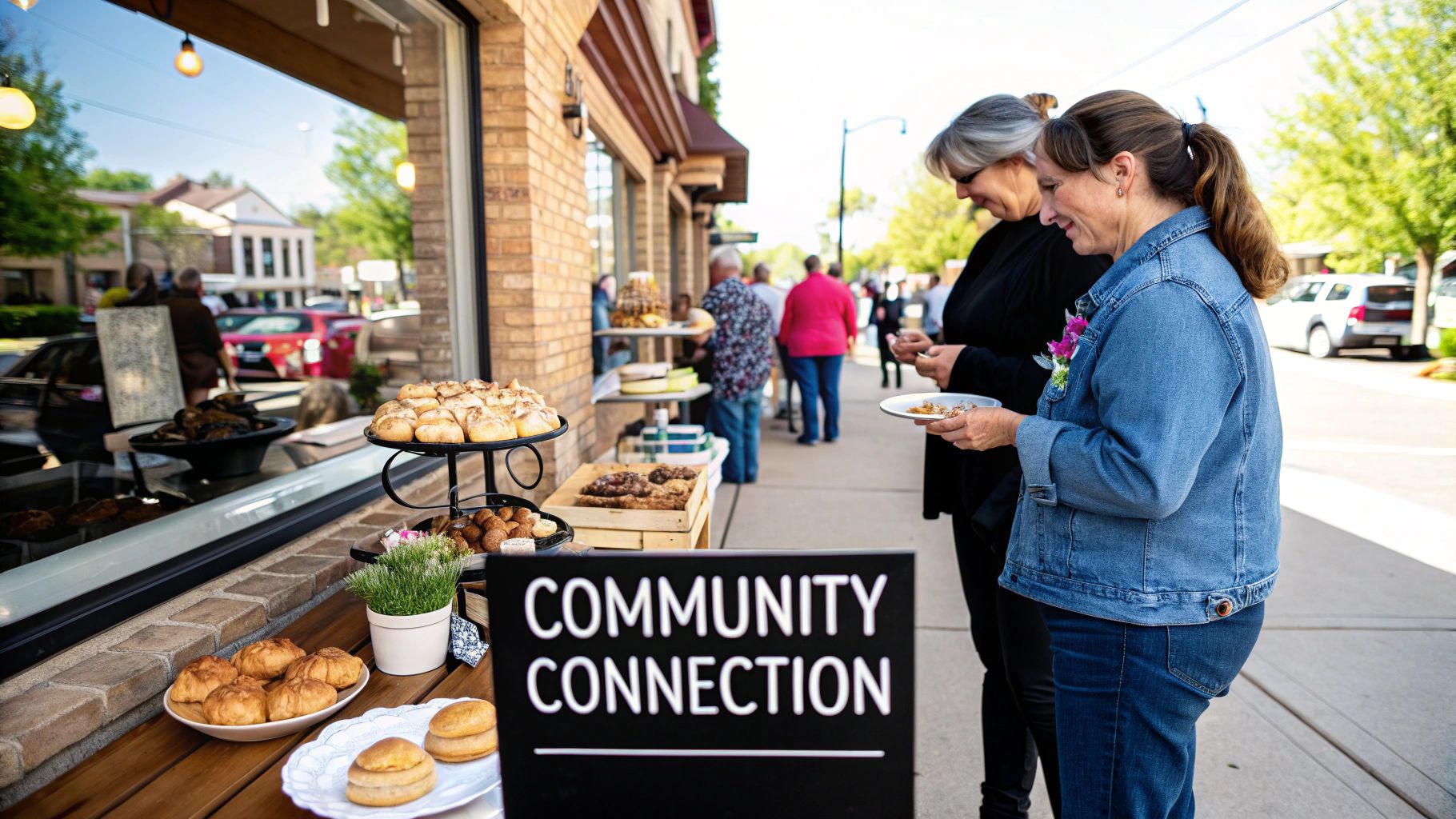
While the online world is critical, the true heart of local marketing beats with genuine, face-to-face relationships. It’s about more than just having a local address; it’s about being an active, visible part of the Chelsea community.
Powerful offline strategies build a kind of trust and loyalty that digital clicks just can’t replicate. This is where you go from being a business in Chelsea to being a business for Chelsea.
Become a Community Hub
One of the best ways to forge these connections is to turn your physical space into more than just a place to buy things. Hosting events is a fantastic way to bring people through your door for a memorable experience that has nothing to do with an immediate sale.
Think about what you could offer:
- Host a Workshop: A local hardware store could run a free DIY class on Saturday mornings. A bakery? A cookie decorating session for kids and parents.
- Organize a Meetup: Your coffee shop could be the new home for a local book club or a networking group for other small business owners.
- Create In-Store Events: A boutique could host a seasonal styling event, offering personalized fashion tips and making customers feel special.
These activities offer real value beyond your products. They turn your business into a cornerstone of the neighborhood’s social fabric and create positive memories that people will associate with your brand.
Forge Strategic Local Partnerships
You don’t have to build your audience from scratch. Teaming up with other non-competing businesses in Chelsea is a brilliant way to tap into new customer pools and cross-promote. Just think about who else serves your ideal customer.
For example, a local gym could partner with a nearby health food store for a “wellness week” promotion. A wedding photographer might team up with a local florist to offer bundled discounts. These collaborations are a win-win, adding value for customers while expanding the reach of both businesses.
Goodwill is a powerful currency in a small community. The more you actively support other local businesses, the more they will want to support you in return, creating a referral engine built on mutual respect.
Invest in Traditional and Hyperlocal Media
Don’t write off old-school media, especially when it’s highly targeted. While digital ads are essential, a tangible piece of mail can sometimes cut through the online noise and make a much stronger impression.
Placing an ad in a community newsletter, sponsoring a local little league team, or having a booth at a neighborhood festival shows you’re truly invested in Chelsea. On top of that, hyper-targeted direct mail campaigns can be incredibly effective.
You can learn more about how to precisely target households with our guide to Every Door Direct Mail marketing. These offline methods prove you’re committed to the community, building trust where it matters most—right here at home.
Real-World Local Marketing Wins

Theory is great, but seeing these strategies in action is where it all clicks. The best way to understand the power of local marketing is to see how real businesses—the kind you see every day in Chelsea—are using it to win. These examples aren’t just hypotheticals; they’re a practical blueprint for blending digital tactics with genuine community building.
Let’s start with a local bakery looking to get more people through the door during the morning rush. Instead of casting a wide, generic net, they get hyper-local. They start by encouraging customers to snap photos of their morning coffee and croissant, share them on Instagram with a unique hashtag, and tag the bakery’s location. Just like that, their happiest customers become their most authentic marketers.
But they don’t stop there. They notice a few popular coffee shops nearby that have great coffee but no real food program. So, they strike up a partnership. The bakery supplies fresh pastries daily, and the coffee shops promote them as their “official pastry partner.” It’s a simple, win-win move that introduces the bakery to a built-in audience of local coffee lovers, driving a noticeable uptick in new foot traffic.
From Hardware Store to Community Hub
Now, picture a local hardware store trying to hold its own against the big-box giants. Competing on price is a losing battle. So they don’t. They compete on expertise and community.
Every Saturday, they start hosting free DIY workshops. One week it’s “How to Build a Raised Garden Bed,” the next it’s “Simple Plumbing Fixes for Homeowners.” These events do more than just sell a few extra bags of soil or some PVC pipe. They cement the store’s reputation as the go-to place for real, hands-on advice. People feel connected.
Attendees start sharing photos of their finished projects in local Chelsea Facebook groups, always giving a shout-out to the store that taught them how. That’s word-of-mouth gold.
This shift toward authentic, local connection isn’t just a feeling; it’s a massive consumer trend. Globally, 47% of consumers say supporting local businesses is a key factor in their purchasing decisions. It’s even more pronounced here in the U.S., where 36% of shoppers pick local brands specifically to support the domestic economy, and another 20% simply believe local shops do a better job of meeting their needs. You can dive deeper into these evolving consumer preferences on mckinsey.com.
The Real-World Payoff
These aren’t just feel-good stories; they translate directly to the bottom line. Every one of these strategies is designed to produce tangible results you can actually measure.
By combining smart digital tactics with genuine community involvement, local businesses create a loyal following that national chains can’t replicate. Success isn’t about outspending the competition; it’s about out-connecting them.
Here’s a quick rundown of what these businesses actually achieved:
- More Foot Traffic: The bakery saw a clear lift in morning sales that they could directly attribute to the coffee shop partnership.
- Top of Local Search: All those positive reviews and workshop mentions pushed the hardware store’s Google Business Profile to the top. They became the #1 result for “hardware store in Chelsea.”
- Sustainable Growth: Both businesses built a base of loyal customers who came back not just out of convenience, but because they felt like part of a community.
Your Top Local Marketing Questions, Answered
Jumping into a new strategy always raises a few questions. We get it. To help you get started with confidence, we’ve pulled together answers to the most common things business owners in Chelsea ask us.
Think of this as your quick-start guide to handling everything from your budget to knowing if your efforts are actually paying off.
How Much Should I Budget for Local Marketing?
There’s no magic number here. Your perfect budget really depends on your industry, how much competition you have locally, and what you’re trying to achieve. That said, a solid rule of thumb for most small businesses is to set aside 5-10% of your total revenue for all your marketing.
The great news? You don’t have to break the bank to get started. You can make a real impact with just a few hundred dollars a month, especially with super-targeted social media ads. But honestly, some of the most powerful first steps don’t cost a dime.
Before you spend anything, focus on the free stuff that builds your foundation. That means fully optimizing your Google Business Profile, making it a habit to ask for customer reviews, and actually talking to people in local online groups.
Once you see a little momentum from those free efforts, you can start putting some money behind what works. Maybe that’s a few local search ads or sponsoring a table at the next community festival. Just be sure to track what you spend and what comes back, so you can double down on the channels that bring you the best customers for the least cash.
What Are the Best Tools for Local Marketing?
You can get incredibly far with tools that are completely free. Seriously, you don’t need a huge software budget to start making a difference.
If you do nothing else, get these three things dialed in:
- Google Business Profile: This isn’t optional. It’s your digital front door on Google and should be your #1 priority. It’s how people find your hours, number, and location.
- Google Analytics: This free tool is like a treasure map. It shows you exactly where your website visitors are coming from geographically, so you know if your marketing is hitting home with the Chelsea crowd.
- Native Social Media Tools: Don’t overlook the built-in tools on platforms like Facebook and Instagram. Their advertising features let you target users down to a specific zip code, which is perfect for local businesses.
Once you’ve mastered the basics and have a little more to spend, you can look at paid tools. Something like BrightLocal is great for managing reviews across different sites, and SEMrush has powerful features for digging into local keywords. But start free, get good, and then grow.
How Do I Know If It’s Working?
Measuring your success is all about connecting the dots between your online activity and what’s happening in the real world. You need to look at both to get the full story.
On the digital side, you want to watch for clear signs that people are ready to buy. Your Google Business Profile insights are gold—they’ll show you how many people called you straight from your listing, asked for directions, or found you in a search. In Google Analytics, keep an eye on how much website traffic is coming from your service area and whether you’re ranking for key local searches, like “plumber in Chelsea.”
Offline, the proof is often more direct. Just ask! Make it a habit to ask new customers, “How did you hear about us?” You can also create special offers with a unique code for a specific campaign, like a flyer you handed out or an ad in the local paper, and track how many get used.
At the end of the day, the real measure of success is simple: more foot traffic, more phone calls, and most importantly, more sales from your neighbors right here in the community.
Ready to put your business on the map in Chelsea? Chelsea Business makes it easy for local customers to find you. Add your business to our directory and start connecting with your community today. Get your free listing on ChelseaBusiness.com.